The culture of the tapa
In Almería the tapa is not an appetiser: it is a way of eating, of talking and of inhabiting the city. In many bars in the capital, ordering a drink brings a tapa with it, often chosen from the house's own list; in other establishments it is charged separately or works as a half portion. The custom is so deeply rooted that it has shaped opening hours, kitchen sizes and even the architecture of the bars themselves: long counters, chalkboards in plain view and that midday hum you can recognise from the street.
Best not to turn the custom into a promise. Every house has its own rules, and the tapa served with your drink is a widespread practice, not a universal law or a guarantee that it comes free. What does remain constant is the spirit: small portions, recognisable cooking and an almost domestic bond between the person behind the bar and the regular who comes back every week for the same thing — which is never quite the same thing.
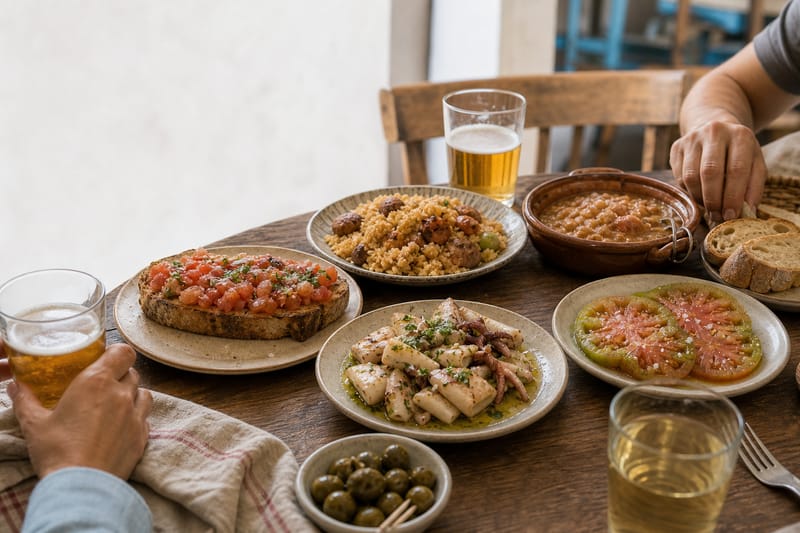
The unwritten rule of tapeo
Tapeo follows a simple choreography that nobody explains because everybody knows it. First you order your drink; if the bar works from a list, each drink opens a turn to choose a tapa, and the table builds up by accumulation: yours, mine and whatever someone ordered "just to try". You eat standing or perched on a stool, you pick from other people's plates without asking solemn permission, and the bill is settled at the end, from memory or from the chalkboard.
The second rule is movement. Going for tapas is not about settling into one place but about stringing several together: at each stop you order little, try what that house does well and move on. The route matters as much as the menu, because changing bars means changing neighbourhood, conversation and speciality. The third rule is one of rhythm: the midday tapeo is different from the evening one — the first more unhurried, the second more social — and both end before the table turns into a banquet.
The tapa is a unit of measurement: of hunger, of conversation and of the city.
A short glossary of Almería's dishes
These are the names worth recognising on a chalkboard or a tapas list. Almost all of them vary from house to house; none needs translating once tasted.
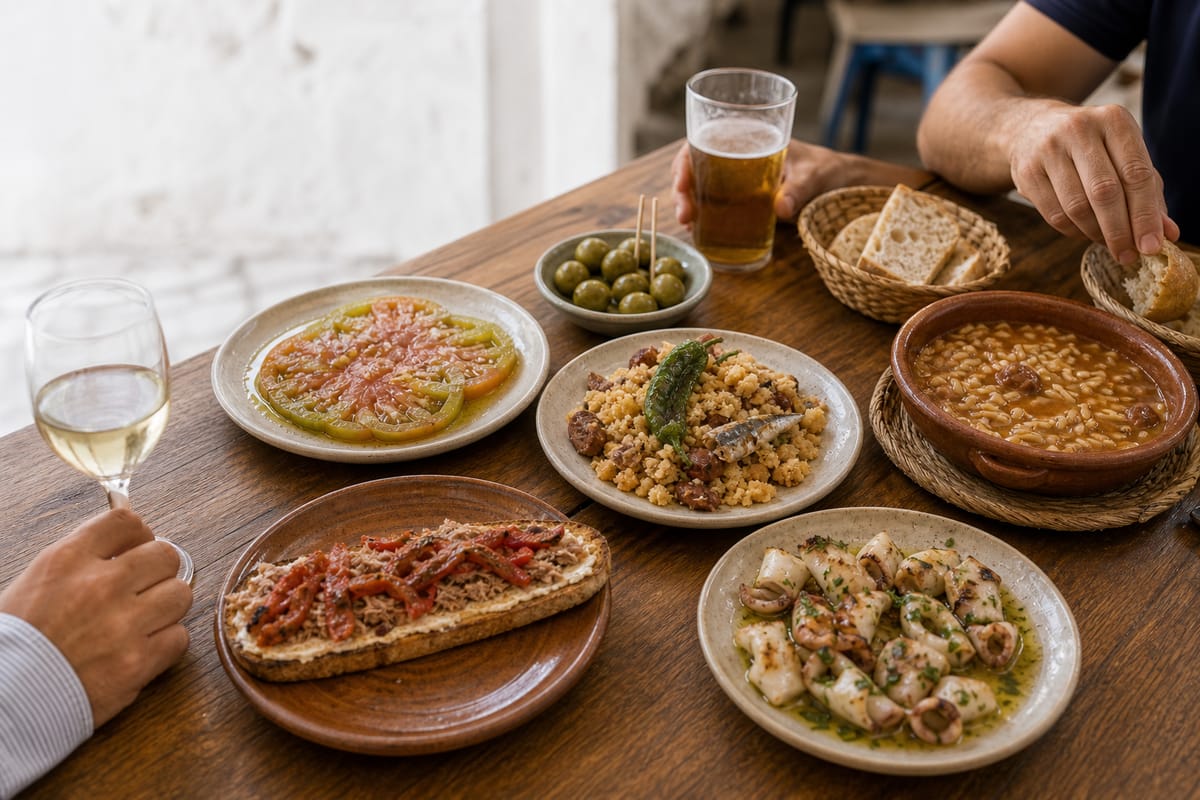
- Chérigan (or cherigan): a slice of toasted bread with the most varied toppings, now an emblem of the city's bars.
- Migas de sémola: semolina flour worked in the pan, tied by tradition to rainy days; depending on the house, they come with fish, cured sausage, peppers or grapes.
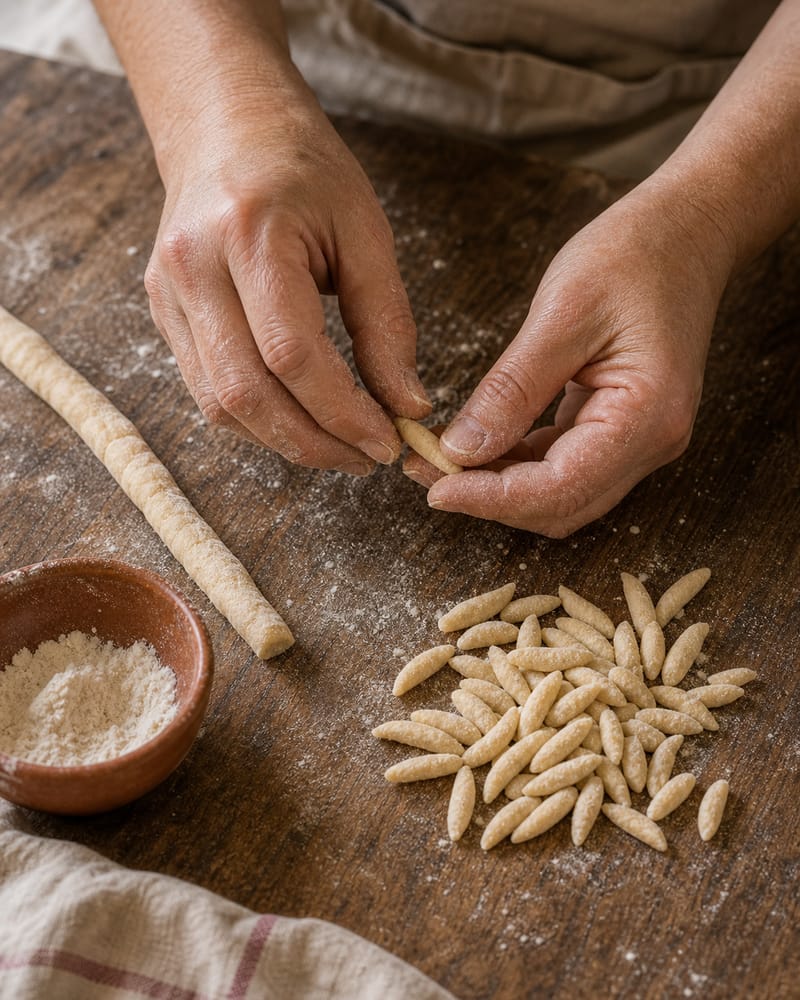
- Gurullos: small hand-shaped pasta, the star of hearty stews.
- Trigo: a potage of wheat grain and pulses, an inheritance from the subsistence cooking of the interior.
- Ajo colorao: a mash of potato, dried pepper and spices, with variants from one district to the next.
- Patatas a lo pobre — "poor man's potatoes" — and their bar-counter relative, the tabernero.
- Pipirrana de pulpo (octopus salad), anchovies in vinegar and fried fish, summer's fresh trio.
- Jibia (cuttlefish), grilled or in sauce, and the cuajadera of cuttlefish and potatoes, cooked slowly in the oven.
- Caballa a la moruna: mackerel marinated with spices that look to the far shore of the Mediterranean.
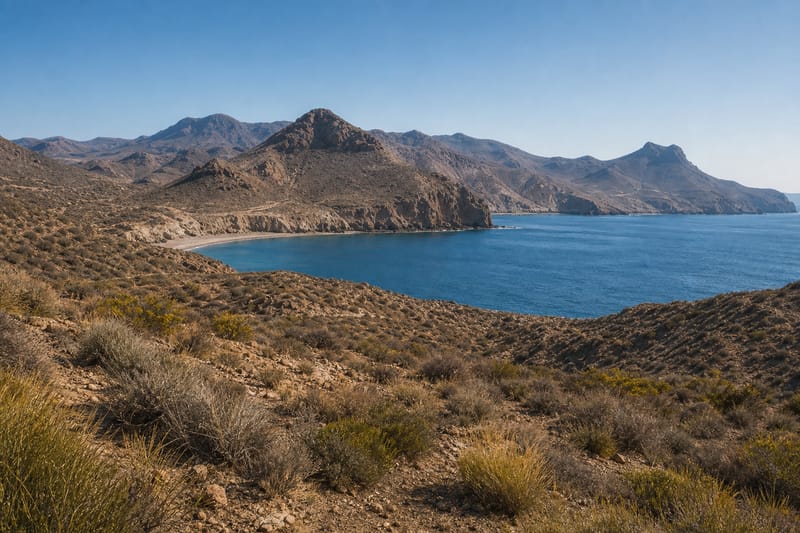
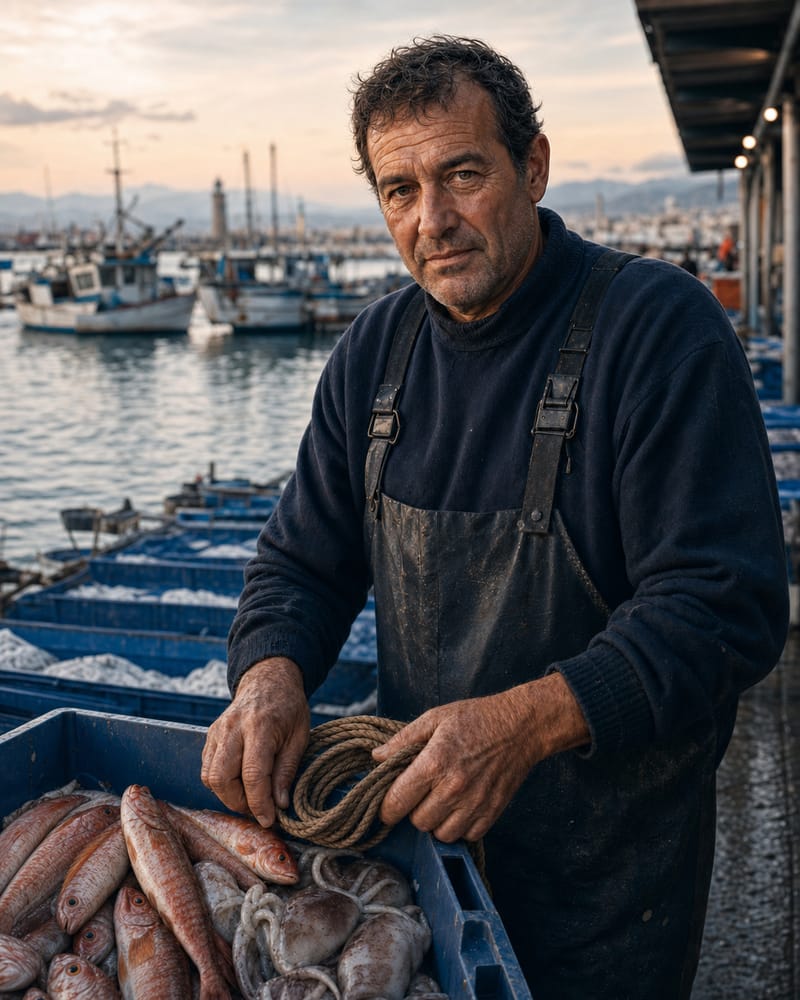
The fish market supplies the rest of the repertoire: red mullet, squid, amberjack, grouper or horse mackerel, depending on the season and on what the fishing port has landed that morning. That seafront — and the beaches and salt flats that extend it — is covered in the sea and nature guide.
One point of geography: the celebrated gamba roja de Garrucha — the Garrucha red prawn — is a product of the province, landed at a port in the Levante almeriense, the province's eastern coast, not a catch of the capital. It appears often on the city's menus, but its name points to another port, and that is how it should be told. Nor do the dishes live only in bars: gurullos, trigo and migas accompany the gatherings of the Cruces de Mayo and other dates in the calendar traced by the festivals and traditions guide.
The huerta: the RAF tomato and the Vega's larder
Before it was a bourgeois port or a film set, Almería was huerta — market-garden country — and that agrarian memory is still on the table. The most celebrated product is the RAF tomato, associated with the Vega de Almería, raised in soils and waters that give it its character and turned into the standard-bearer of the local huerta. Around it, peppers, aubergines, courgettes and cucumbers complete a vegetable larder that explains the freshness of pipirranas and bar-counter salads.
The other side deserves naming without embellishment: intensive agriculture under plastic has been an economic and technological engine of the province since the 1960s, and also a landscape that raises questions about water, society and the environment. This guide tells it as context, not as a postcard. The transformation it brought with it is narrated in the history and heritage guide.
Wines of the province
The glass that accompanies the tapa also has nearby origins, although you have to leave the municipal boundaries to find the vines. The province groups four recognised wine-growing areas:
- Laujar-Alpujarra: high-altitude vineyards in the Almería stretch of the Alpujarra.
- Ribera del Andarax: the valley of the river that reaches the sea beside the city itself.
- Desierto de Tabernas: wine-growing in one of Europe's most arid landscapes.
- Norte de Almería: the highlands of the province's interior.
None of these areas lies within the city; all of them fit on its table. Asking for a local wine is, besides, a good way to strike up a conversation at any bar.
Where to go for tapas
Each part of the city gives tapeo a different tone. The historic centre concentrates the most classic version: the streets between Puerta de Purchena, the Paseo de Almería and the cathedral quarter, an inheritance from the nineteenth-century bourgeois city told in history and heritage. Here the tapeo belongs to midday and to after work, with veteran counters and conversation crossing the bar.
The central market and its surroundings add the atmosphere of the produce itself: fresh goods on display, early breakfasts and a tapeo that begins when the shopping ends. In Pescadería, the seafaring quarter beside the fishing port, the identity is different: more salt, more fish and a working-class culture where flamenco also lives. It deserves to be visited with the same respect as any lived-in neighbourhood.
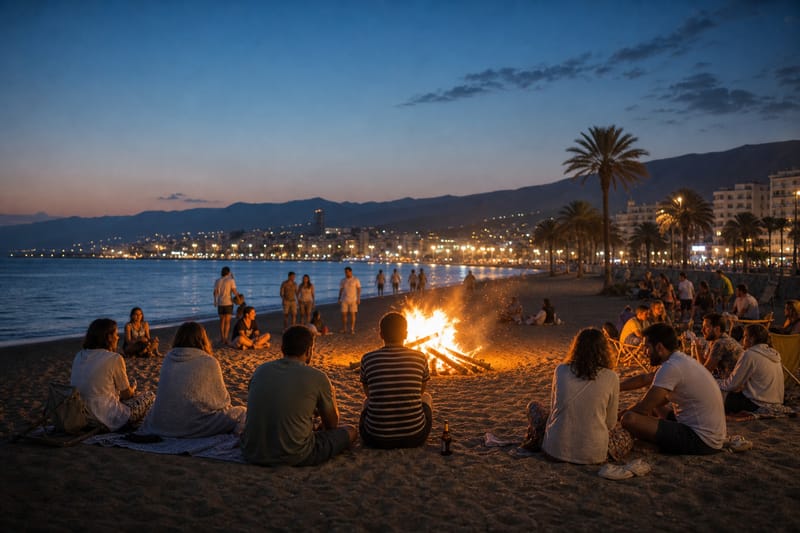
The seafront, from the Paseo Marítimo to El Zapillo, is the stage for sunset: terraces and beach bars facing the bay, in that light which has made Almería a recurring film set, as the cinema and music guide recalls.
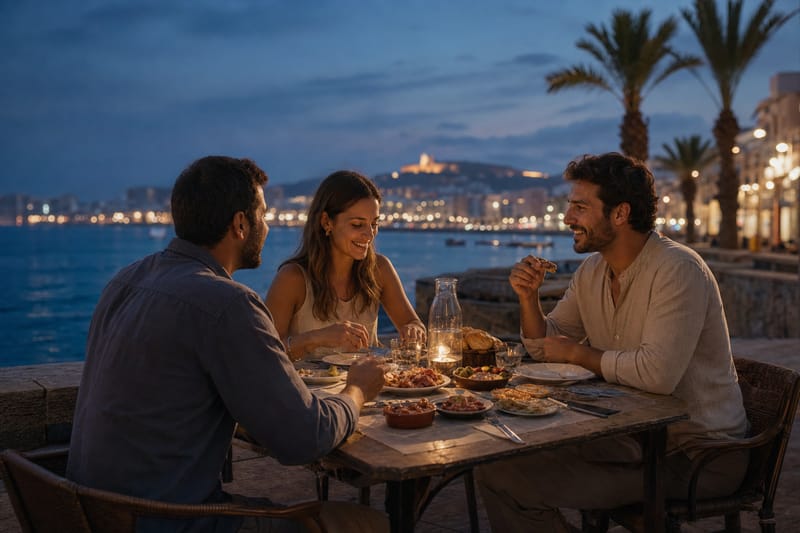
Deliberately, no addresses: this guide recommends no specific establishments and publishes no prices, menus or opening hours, because they change too fast to age well on a page. It describes atmospheres; the bar is yours to choose. For up-to-date practical information, go to the municipal tourist office linked in the sources.
2019, a fact for context
In 2019 Almería was Spanish Capital of Gastronomy, a distinction the city council promoted and celebrated throughout that year. It should be read for what it is: not a slogan still in force, but the public confirmation of something that predates and outlives the date — the existence of a cuisine with an identity of its own, sustained by the produce of the bay and the huerta and by a bar-counter culture handed down without a manual.
If you want to turn all of this into a concrete plan, the travel itineraries guide devotes a good part of its 48-hour proposal to the table and the sea, with tapeo as the thread running between monuments and beaches.
Sources
This guide synthesises municipal and regional sources; the names of dishes, products and wine-growing areas come from them. Practical information should always be checked on the official pages.